About me
I’m Tilo, a Tai Chi practitioner and teacher based in Sydney.
On this page, I offer an overview of how I approach Tai Chi as an integrated practice that connects body, mind and philosophical reflection.
My path in Tai Chi is shaped by three closely connected dimensions:
Practitioner & Teacher – Martial Artist – Philosopher
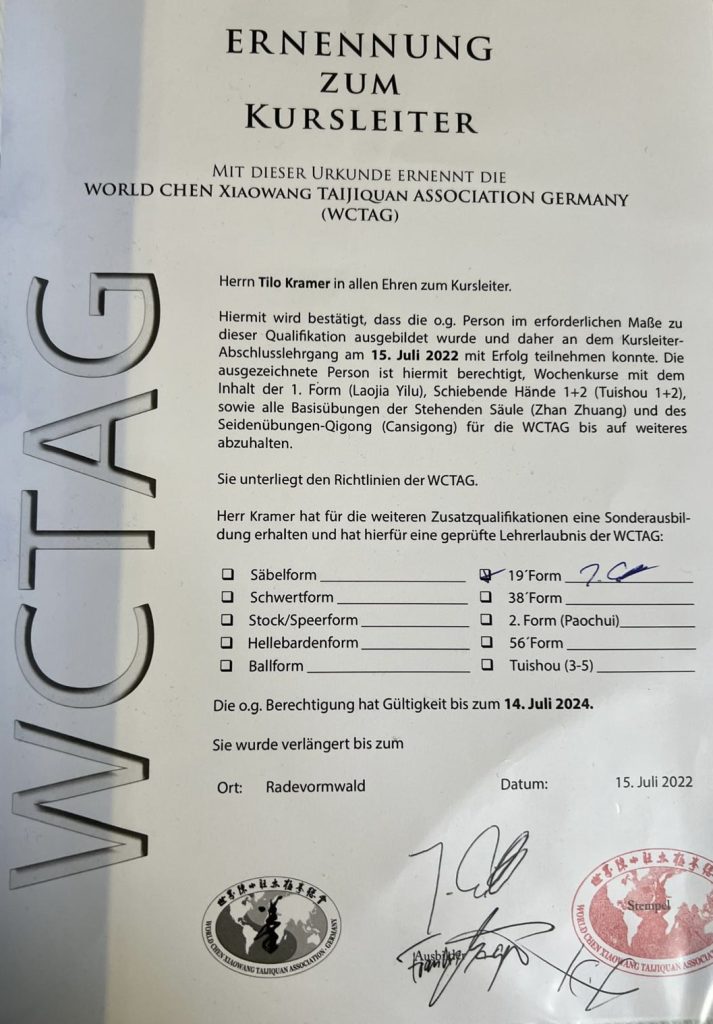
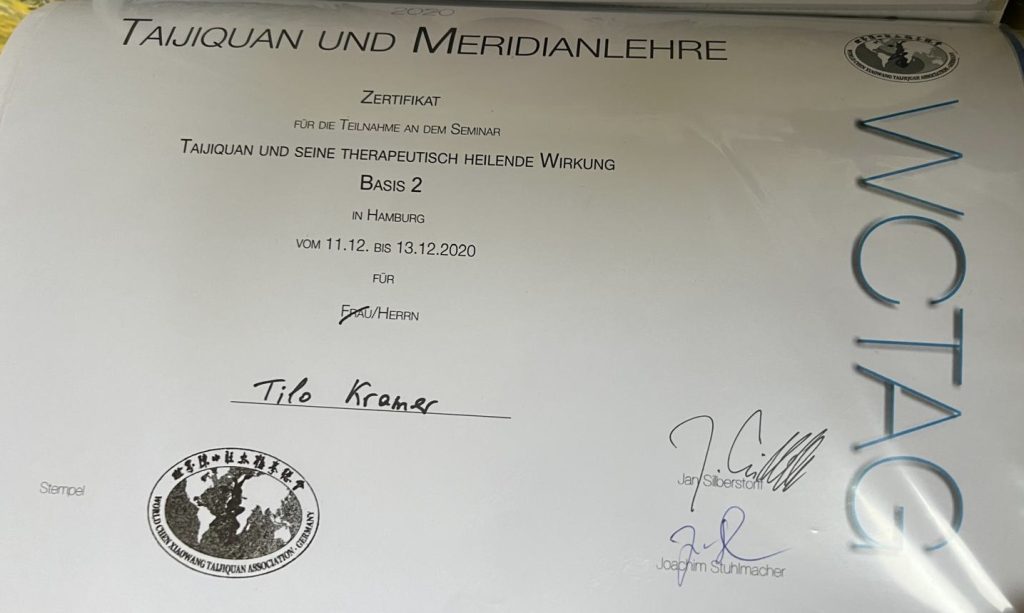
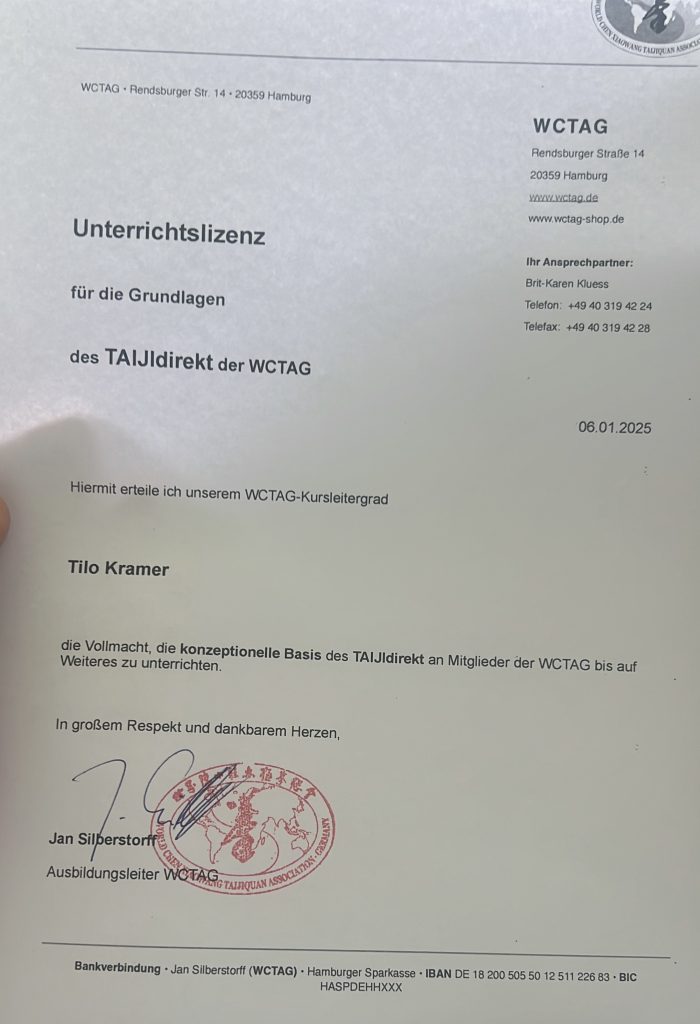
What qualifies me to teach you?
- Verified teacher of the World Chen Taiji Association Germany (WCTAG),
Germany’s largest Tai Chi association - Direct private student of Jan Silberstorff,
founder of the World Chen Taiji Association (WCTA), the world’s largest and most influential Tai Chi Association - Over 7 years of continuous training and association with the World Chen Taiji Association Germany (WCTAG)
- Published author of The Daodejing in the Mirror of Philosophy and Mysticism, examining the philosophical background of Tai Chi practice
Teaching Experience
- 6+ years of teaching experience
- Instructional experience in multiple countries
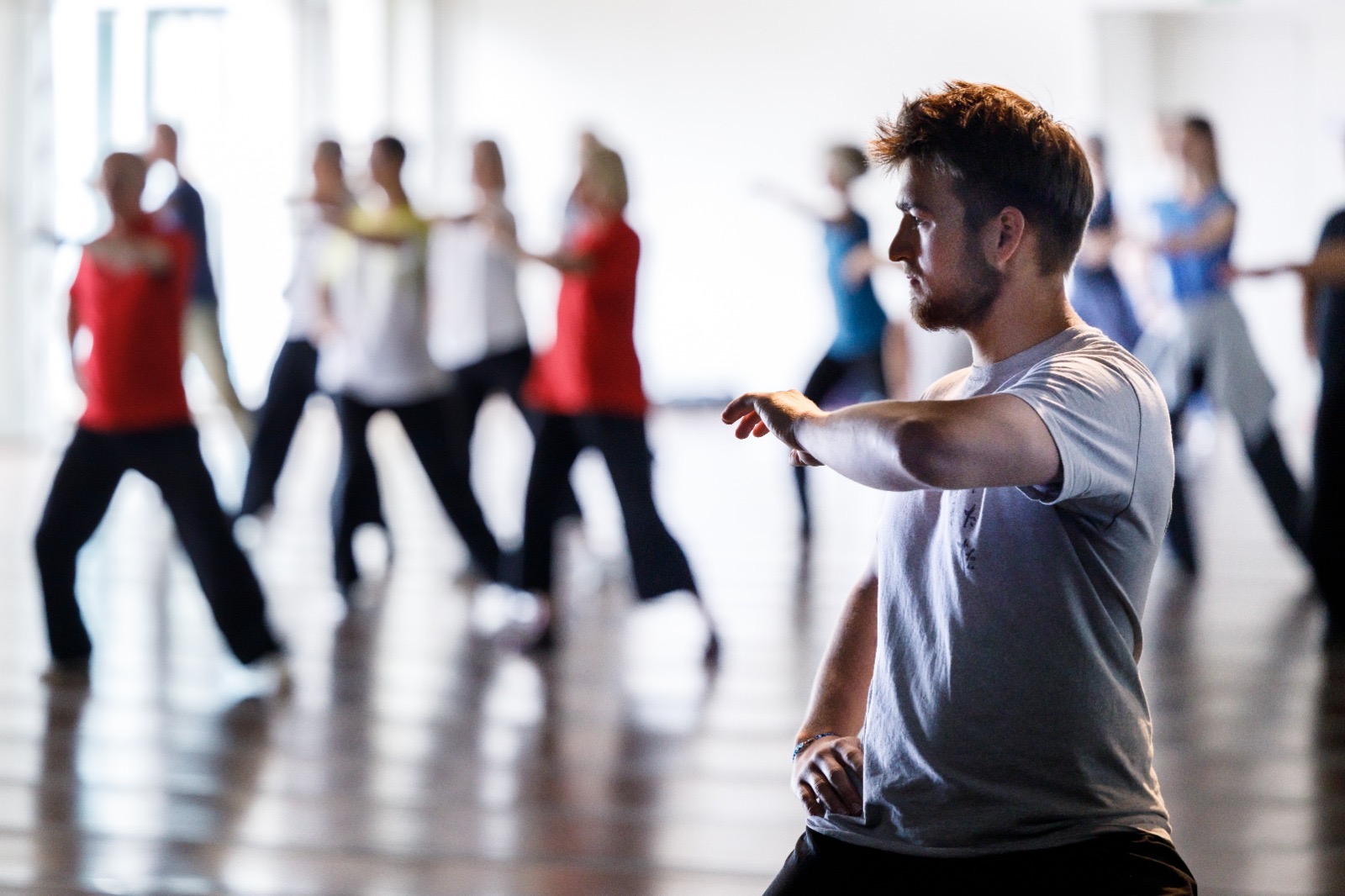
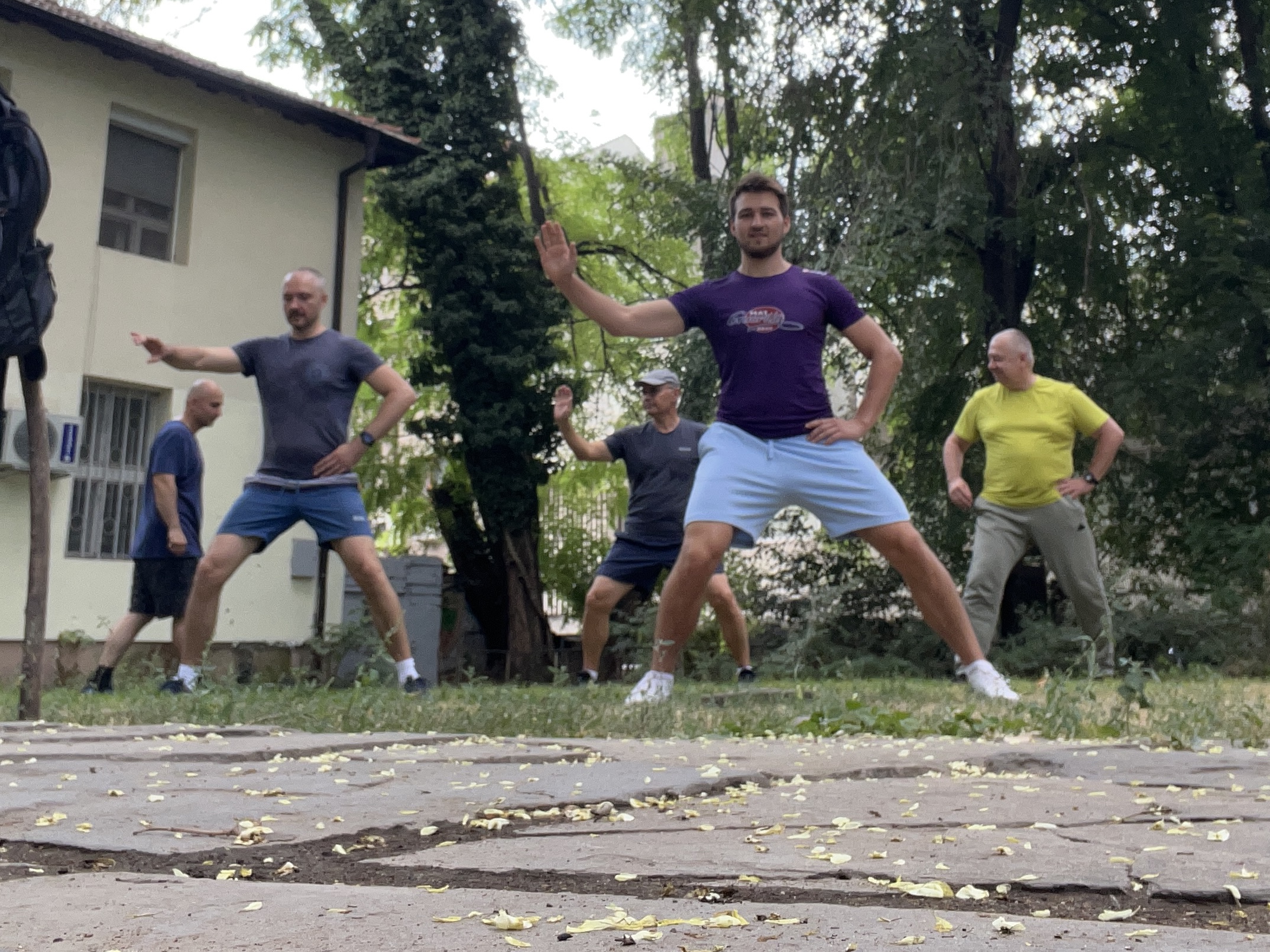
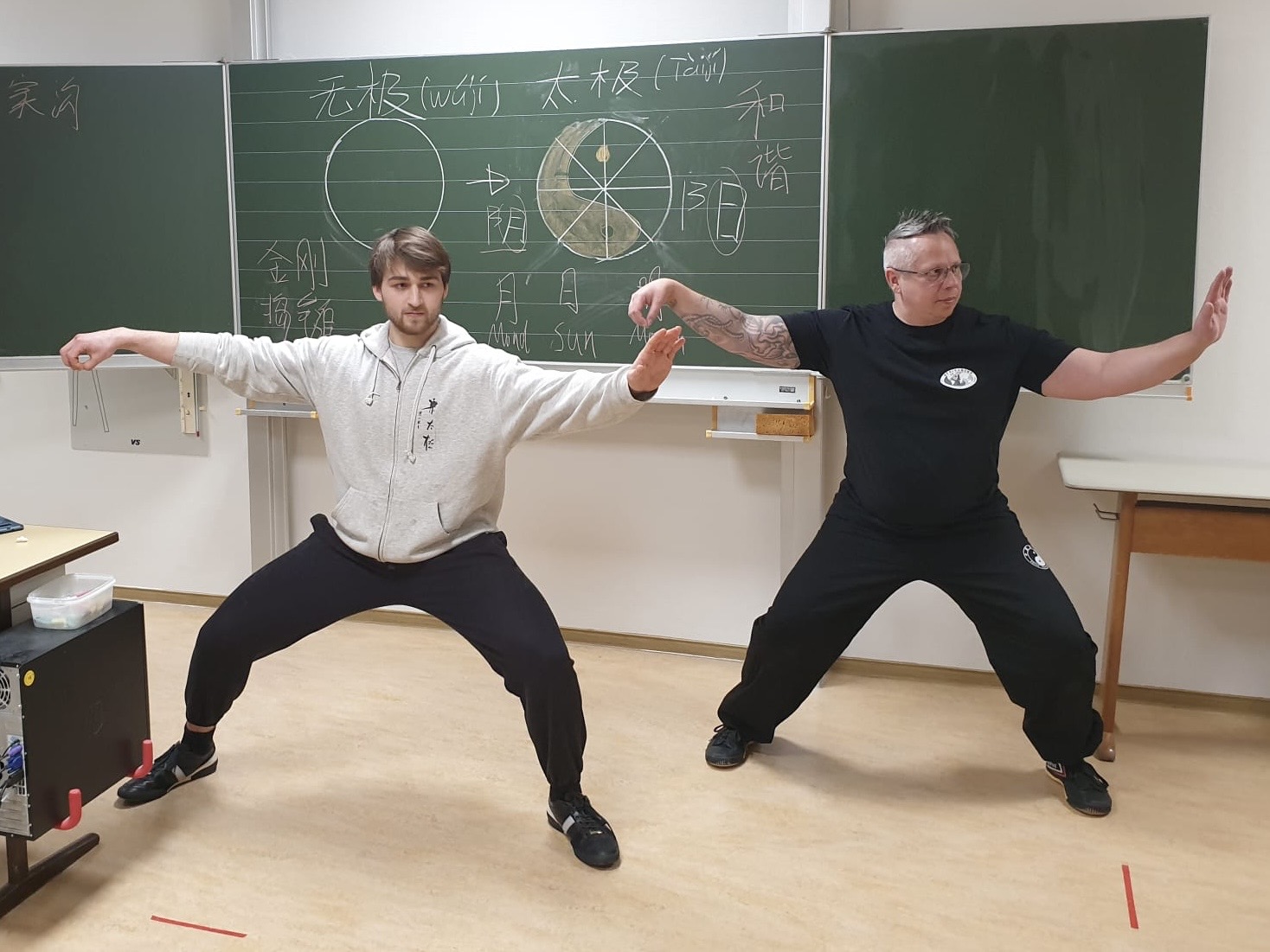
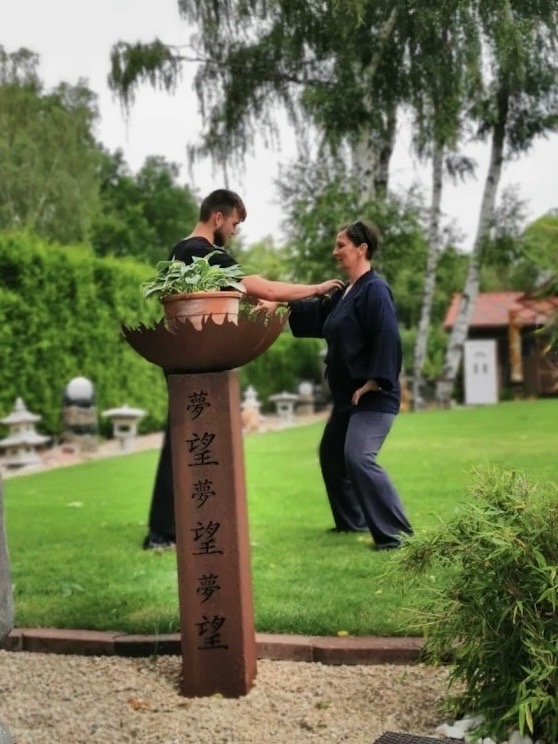
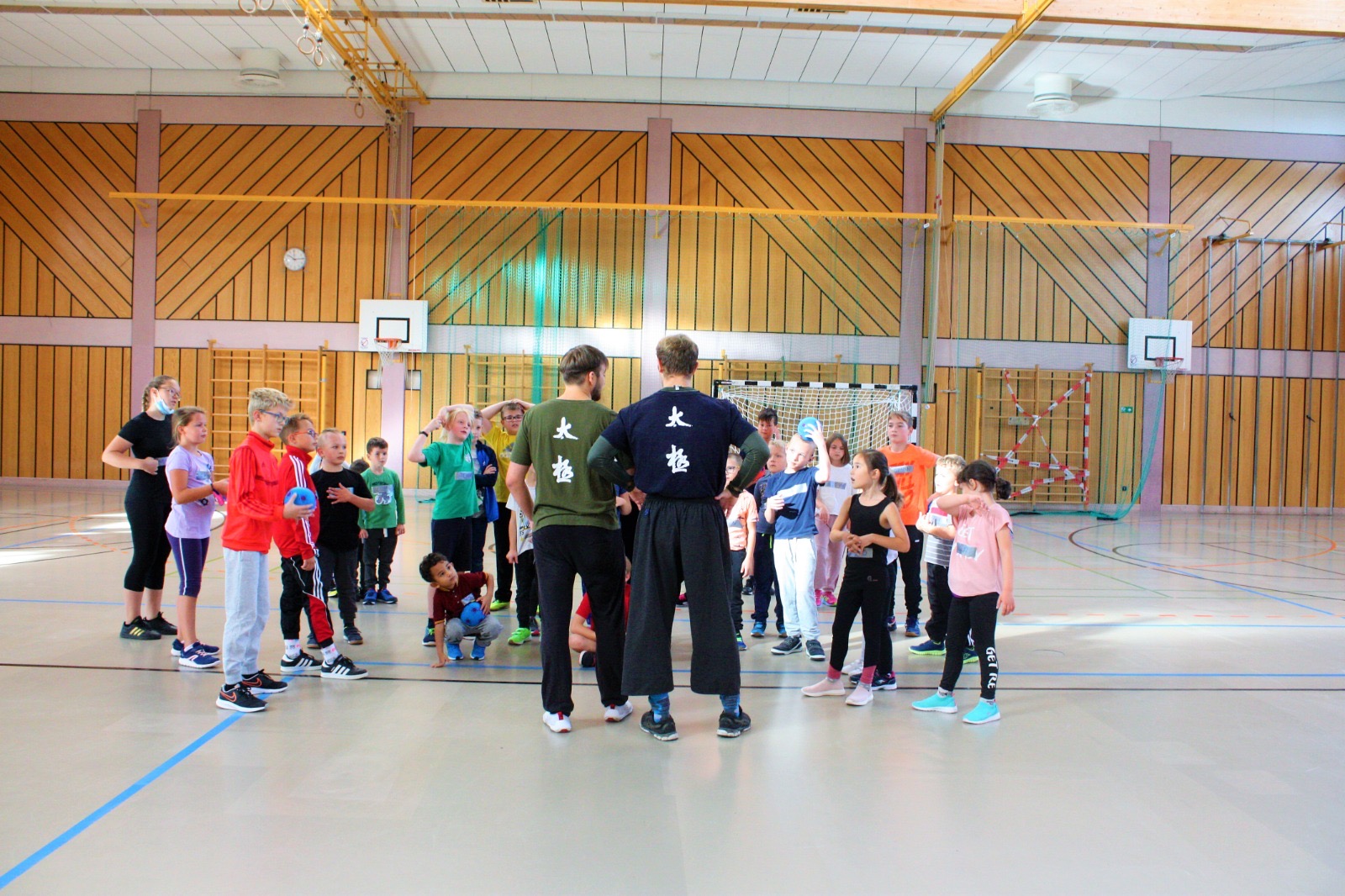
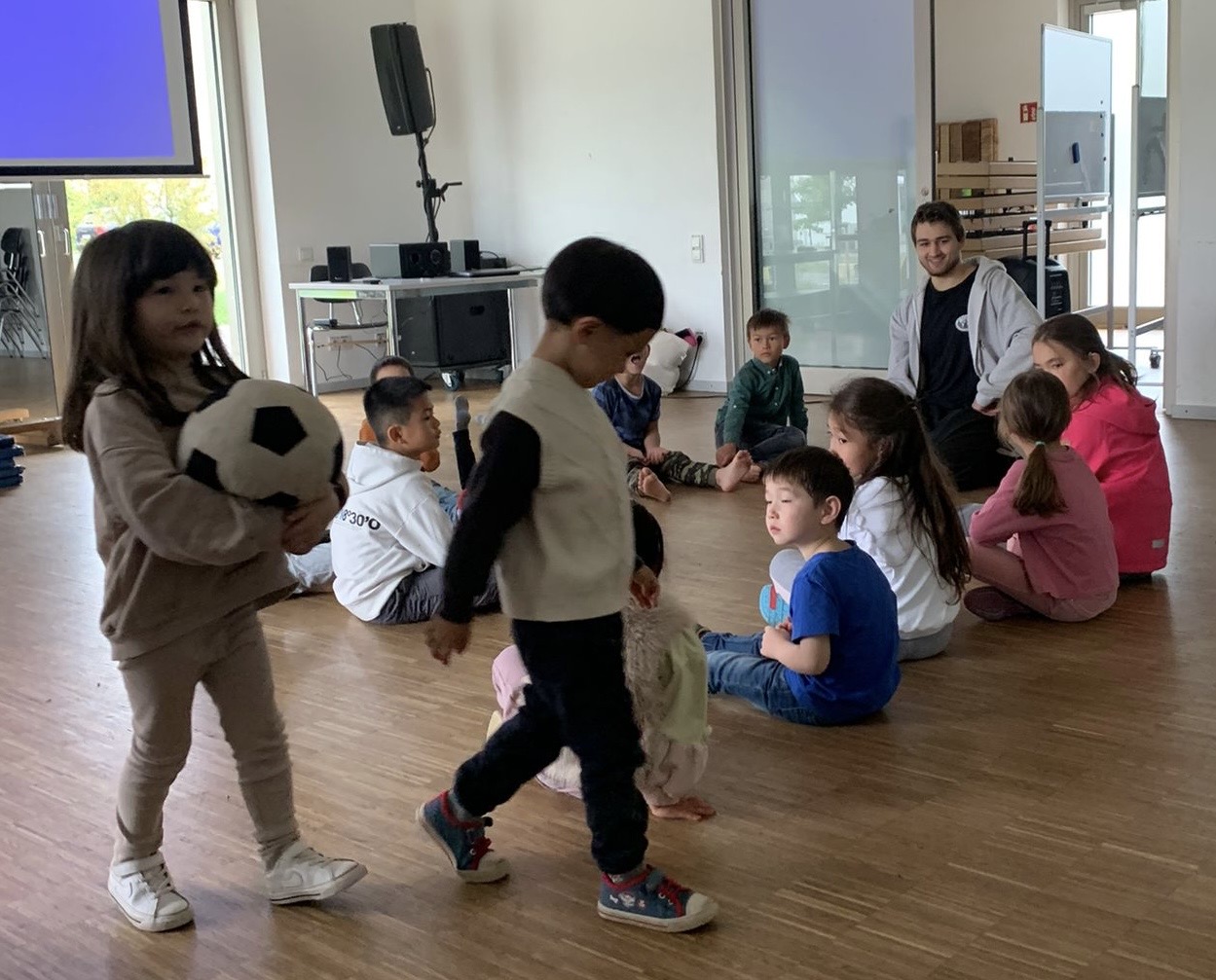
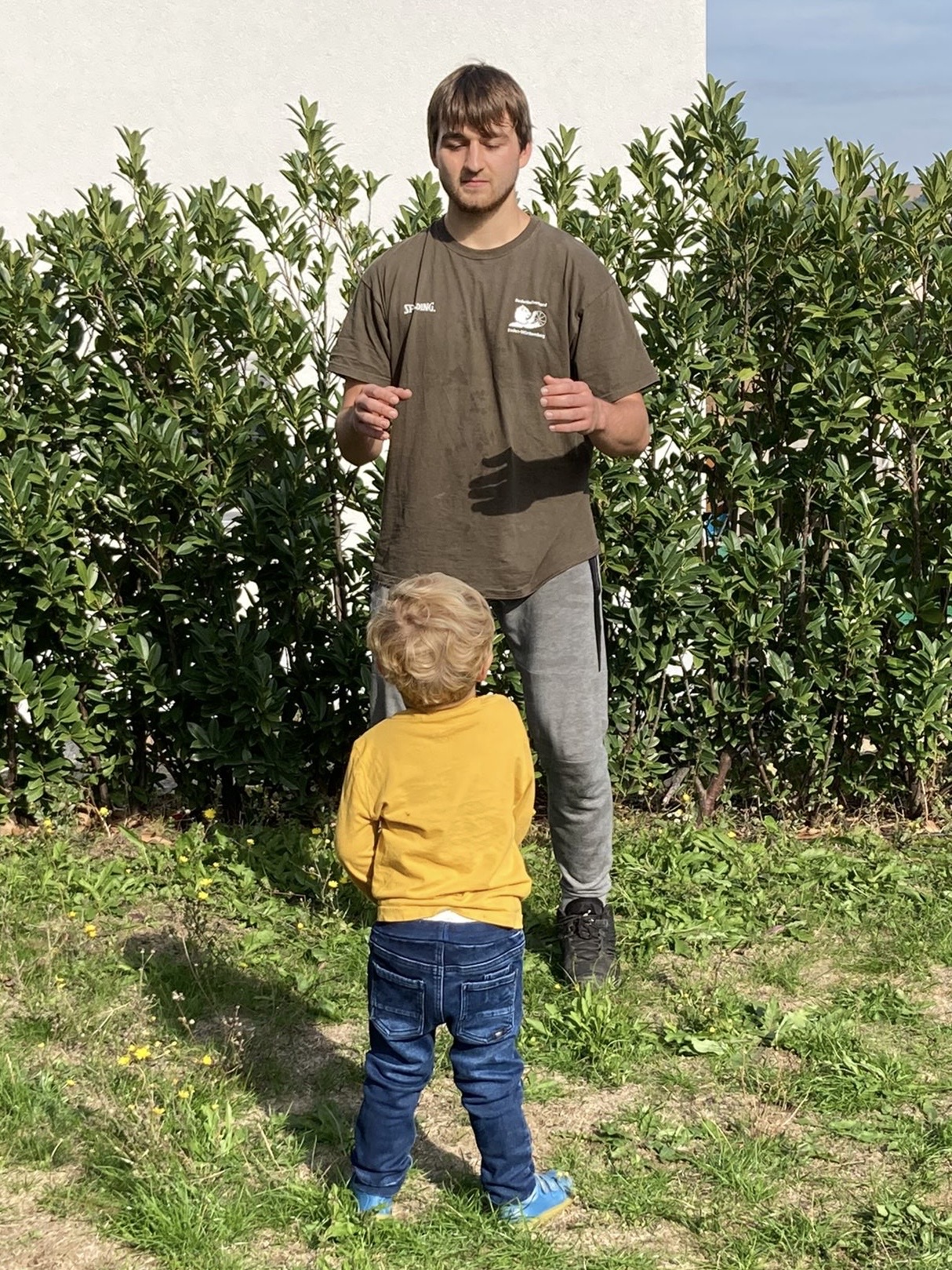
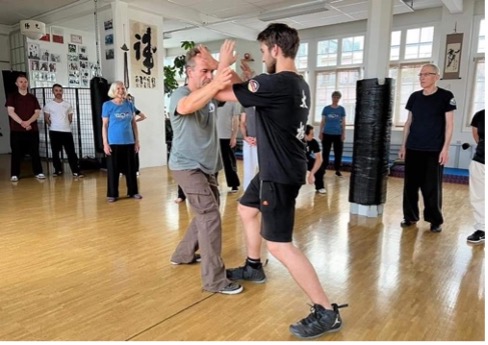
Over the past years, I have gained teaching experience in a wide range of instructional contexts . From assisting senior teachers and leading group seminars to working with children and providing private classes.
Some teaching contexts...
My Holistic Approach
Tai Chi has many facets.
For most people today, it’s a gentle way to move, relax, and stay healthy – a valuable antidote to our fast-paced lives. Yet that’s only one side of it.
About 400 years ago, General Chen Wangting created Tai Chi as an effective martial art to protect his village. From that point on, Tai Chi was known both as a profound inner practice and as a practical method of combat, preserved within generations of bodyguards and escorts.
My intention is to study and teach Tai Chi in its original, holistic sense – as a living art that unites meditation, movement, and martial understanding.
Philosophy & Research
Philosophy gives Tai Chi its particular depth.
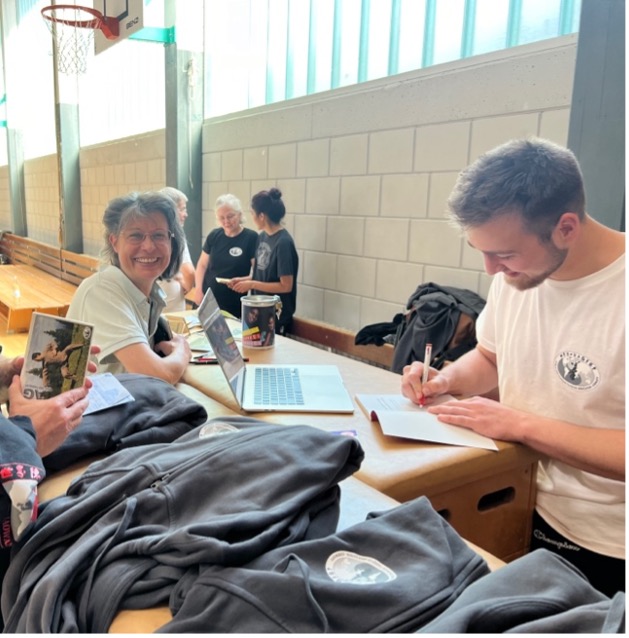
Its philosophical foundation lies in Daoism, especially in the classical text of the Daodejing, which informs Tai Chi not only as a system of movement, but as a way of understanding practice, perception and embodied experience.
Philosophy gives Tai Chi its particular depth.
Its philosophical foundation lies in Daoism, especially in the classical text of the Daodejing, which informs Tai Chi not merely as a system of movement, but as a way of understanding practice, perception and embodied experience.
My philosophical work has been deeply shaped by an engagement with Daoist thought and mysticism. I have published a philosophical book in German examining the epistemological dimensions of the Daodejing in dialogue with Western mystical and apophatic traditions, exploring how knowledge can arise through direct, contemplative experience rather than conceptual abstraction alone.
My current doctoral research examines subjectivity under neoliberalism: how the economization of ever more spheres of life shapes not only our behavior but the very structure of the self in the present. Drawing on Wendy Brown’s account of neoliberalism as a governing rationality, I trace how contemporary subjectivity is formed, and what, if anything, resists that formation. This is a theoretical analysis of capitalism — but it is one that meditation and Tai Chi practice quietly interrogate from another angle, in every session. Each movement unsettles the restless vitality we mistake for being alive, and our fixation on material goods, asking instead what happiness actually is.
Taijiquan as a Martial Art

Historically, Tai Chi emerged as a method of village defence and was later applied in professional security contexts.
For this reason, it is important to me to regularly put the skills developed through training to the test and to examine their practical relevance:
- Numerous international competition experience
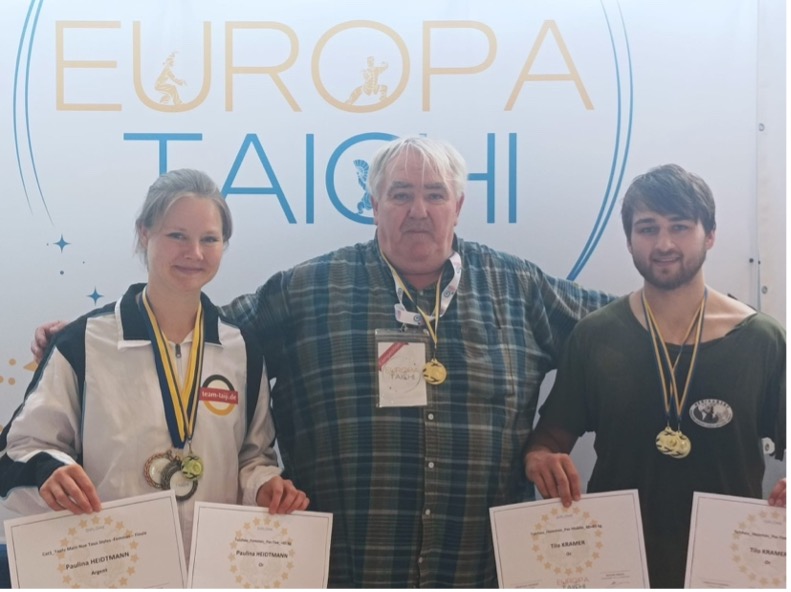
- European Champion in Tai Chi Push Hands (Tuishou), Paris 2023
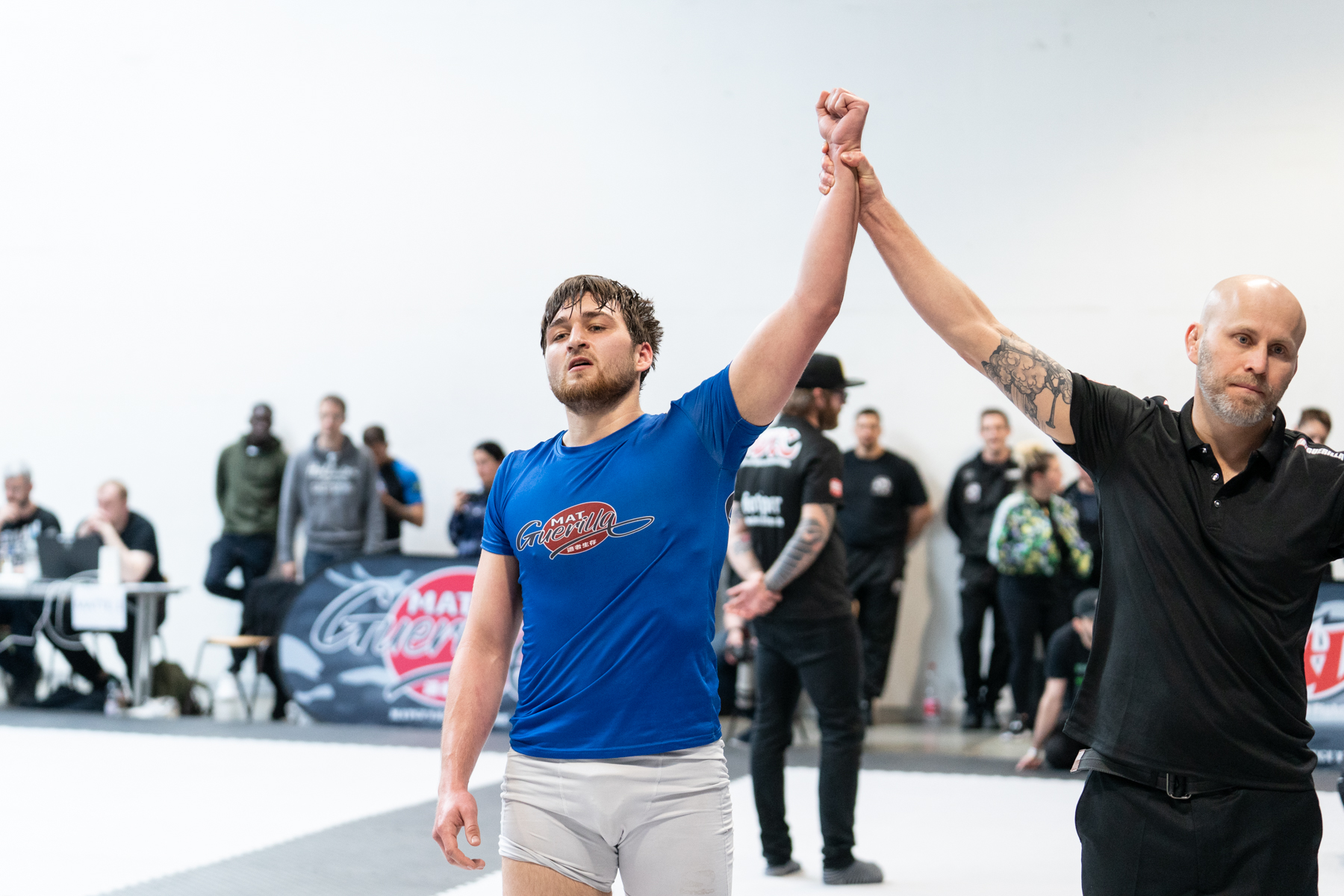
- German Amateur Champion in MMA (Shooto), 2023
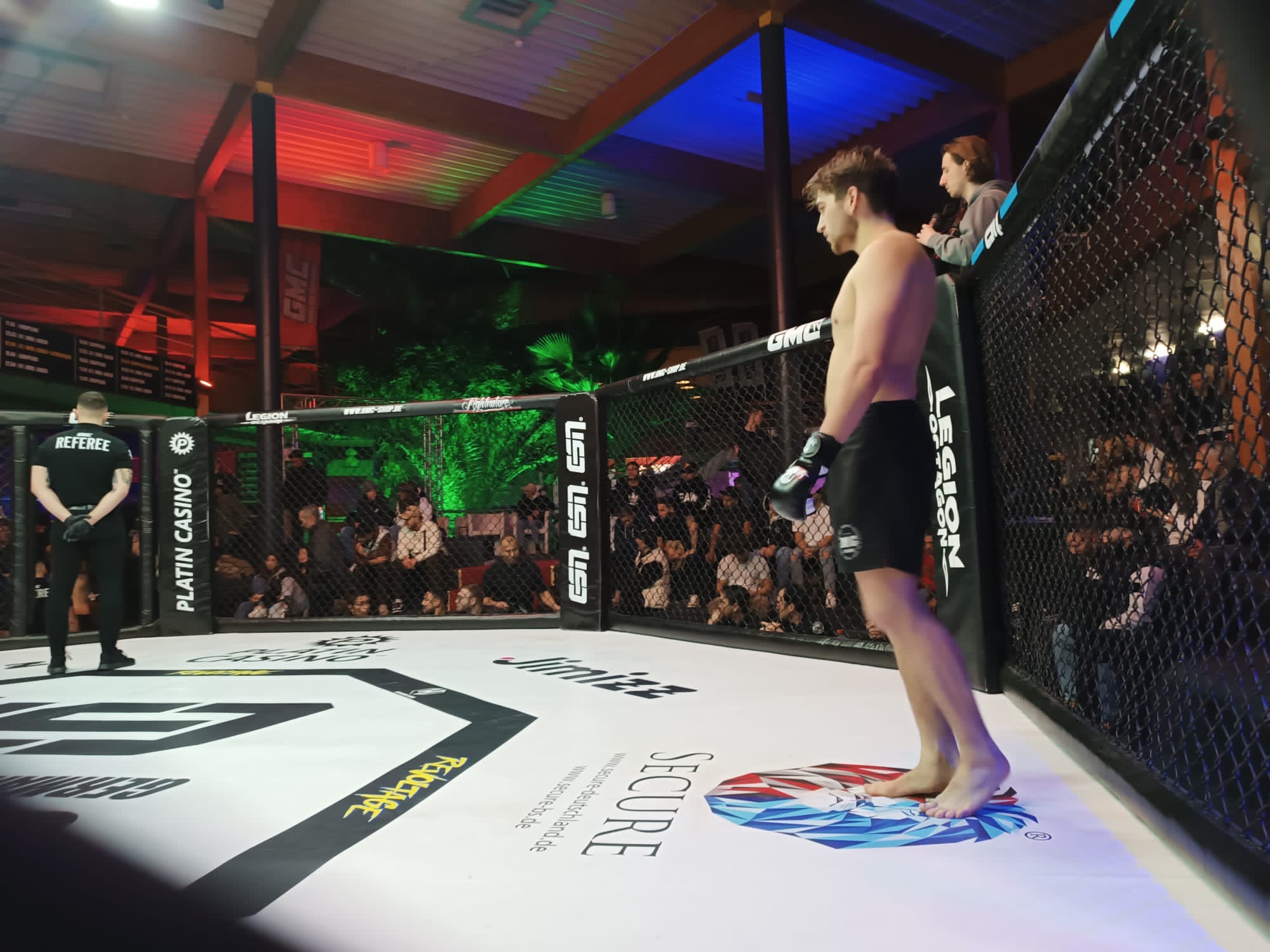
- Active MMA fighter
Many Tai Chi practitioners take part in Push Hands (Tuishou) competitions, where the goal is to unbalance or move the opponent without brute force.
My own path goes a bit further – I also compete as an active MMA fighter and fight out of Igor MMA Sydney.
MMA (Mixed Martial Arts) allows almost every fighting style and technique. Fighters meet in the cage, testing the efficiency of their systems.
Although my training includes conditioning, kickboxing, wrestling, and jiu-jitsu, I seek to apply the Tai Chi principles – balance, timing, listening, redirection – within these modern full-contact settings.
How that works in practice is something I’m always refining – and happy to discuss in person.
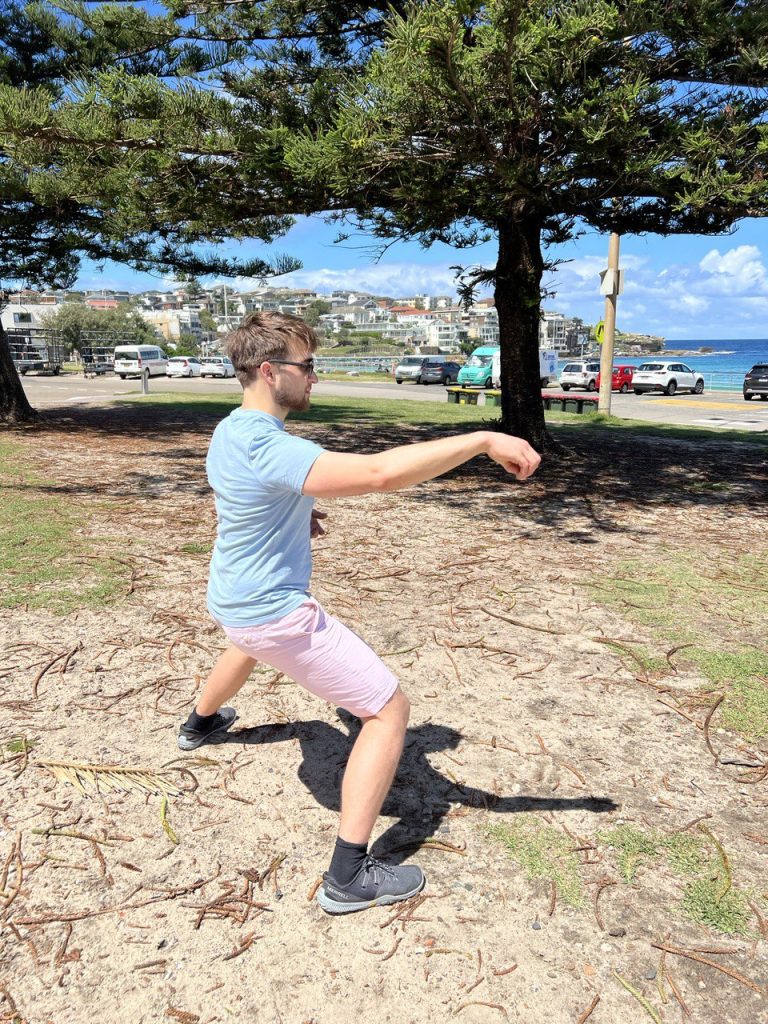
A few impressions:
What matters most to me is to share Tai Chi as a meditative movement art – a discipline that cultivates both physical and mental health, balance, and awareness.
Through teaching and personal practice, I aim to create a space where students can experience stillness in motion, learn to move with intention, and explore how softness can transform strength.
Tai Chi Practitioner & Teacher
My teachers
I believe that to truly understand something in depth, it is important to stay committed to one path and study it thoroughly. Of course, there is value in exploring different practices — perhaps a little Yoga, some Qigong, or even Yang Style Tai Chi. Everyone can choose their own way.
But depth requires continuity. Only when there are dedicated experts in each tradition can others explore different styles and pick what works for them. That is why I remain loyal to one lineage, preserving and refining it over time.
Jan Silberstorff
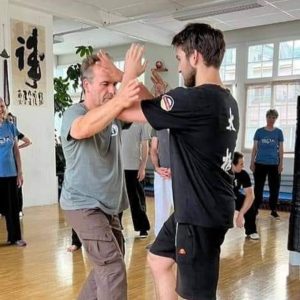
Jan Silberstorff is one of the most respected Western Tai Chi masters, known for his deep knowledge of Chen Style Tai Chi and Taoist philosophy. His decades of training and teaching across the world have inspired countless students to approach Tai Chi not just as a martial art, but as a way of life. He was among the very first Westerners to study Chen Style directly in China and played a key role in introducing authentic Taijiquan to the West. He has taught thousands of students worldwide and is the author of more than eleven books on Tai Chi, contributing significantly to the understanding and preservation of traditional Taijiquan in the modern world. I am grateful to have learned from him and to share in his vision of preserving the authentic Chen tradition.
Chen Yingjun
Chen Yingjun, son of Grandmaster Chen Xiaowang, carries the living lineage of Chen Style Tai Chi into the modern era. Residing in Sydney, he combines traditional skill with a clear, precise teaching method. Training with him has allowed me to refine my movements, understand the martial applications in depth, and stay connected to the direct family heritage of Chen Tai Chi.
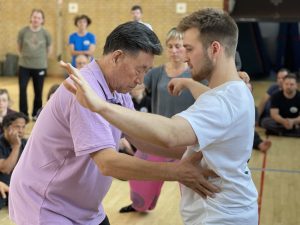
Chen Xiaowang
Grandmaster Chen Xiaowang is the official lineage holder of the Chen Style Tai Chi family. Recognized worldwide for his skill, grace, and understanding of Tai Chi’s internal principles, he has dedicated his life to passing down the art in its purest form. Through his leadership and teaching, the Chen tradition continues to inspire practitioners on every continent.